Login
Login
 Register
 Contact Us



-
Product Category:Chinese Books
-
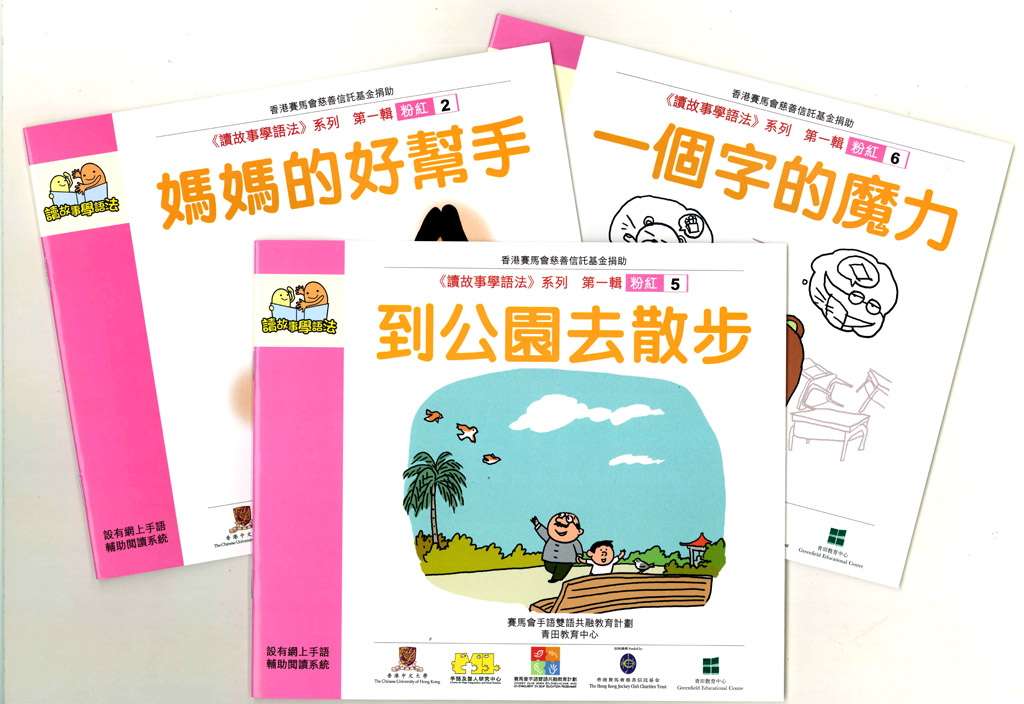
Product Line:Learning Chinese Grammar through Stories
-
Publisher:Centre for Sign Linguistics and Deaf Studies & Greenfield Educational Centre
-
Author:香港中文大学手语及聋人研究中心
-
Illustration:余庭欽、余朝安、李碧兒
-
Print:Colour
-
Size:18.5 x 21.5 cm
-
Age:3-5
-
Language:Traditional Chinese
-
Number Of Pages:15
-
ISBN:TLBook1F
Oversea delivery: please email charge request to info@greenfieldhk.com
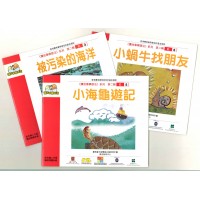
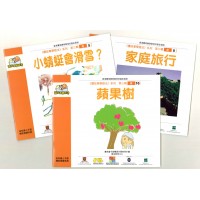
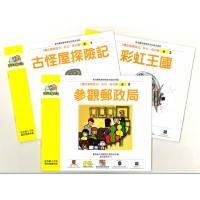
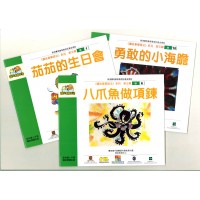
"Learning Grammar Through Stories" (讀故事學語法)
For children whose mother tongue is Cantonese, using correct Chinese grammar can be quite challenging in the early stages of language learning. Reading is the best way to absorb knowledge and enrich language skills. Furthermore, deaf or hard-of-hearing (DHH) children often lack a complete language system in early childhood due to hearing loss, making reading an even more vital tool for them to receive linguistic input.
Through simple text, basic sentence structures, and rich story plots, this series allows children to naturally acquire basic concepts of Chinese grammar as they read, effectively boosting their reading comprehension skills.
Key Support Features:
-
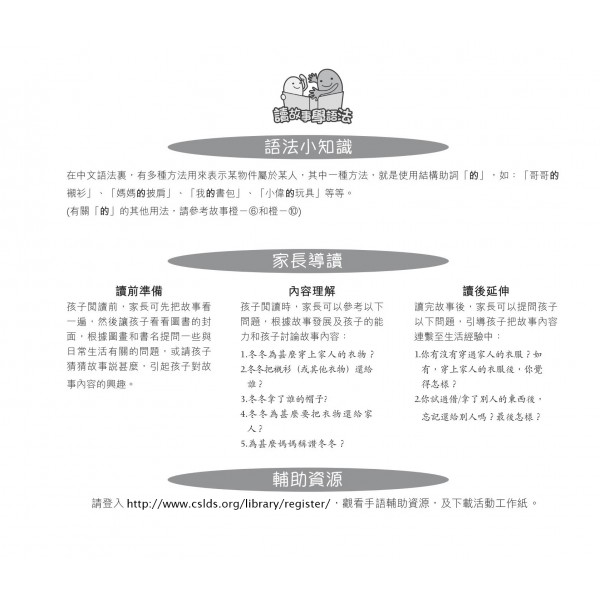
"Grammar Tips" & "Parent-Child Reading Guide": Specially written for parents, featuring comprehension questions and post-reading extension activities for reference.
-
Sign Language-Assisted Reading System & Worksheets: Available online for free to help parents maximize learning outcomes for both DHH and hearing children.
"Grammar Tips" (Pink Stage 1)
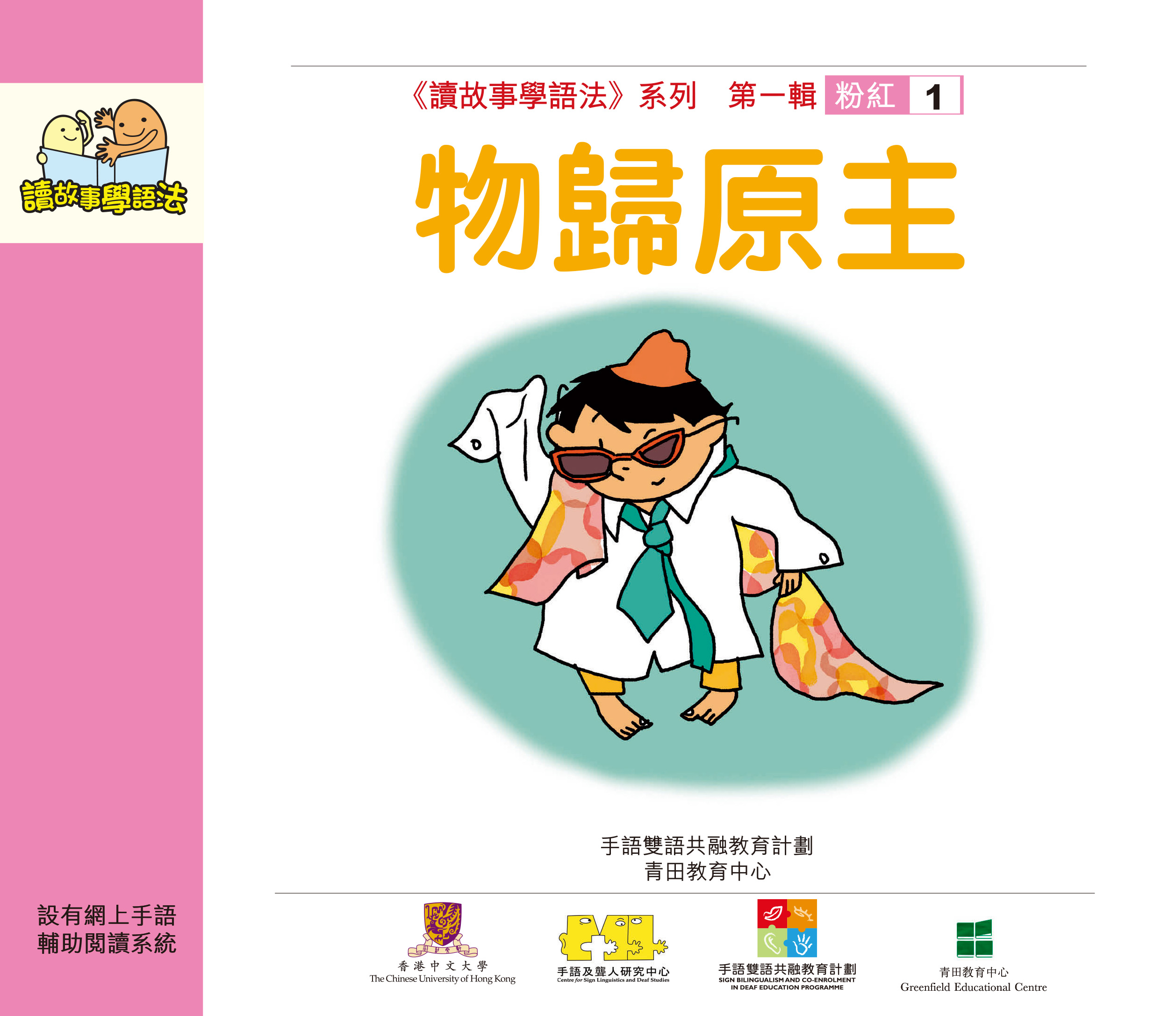
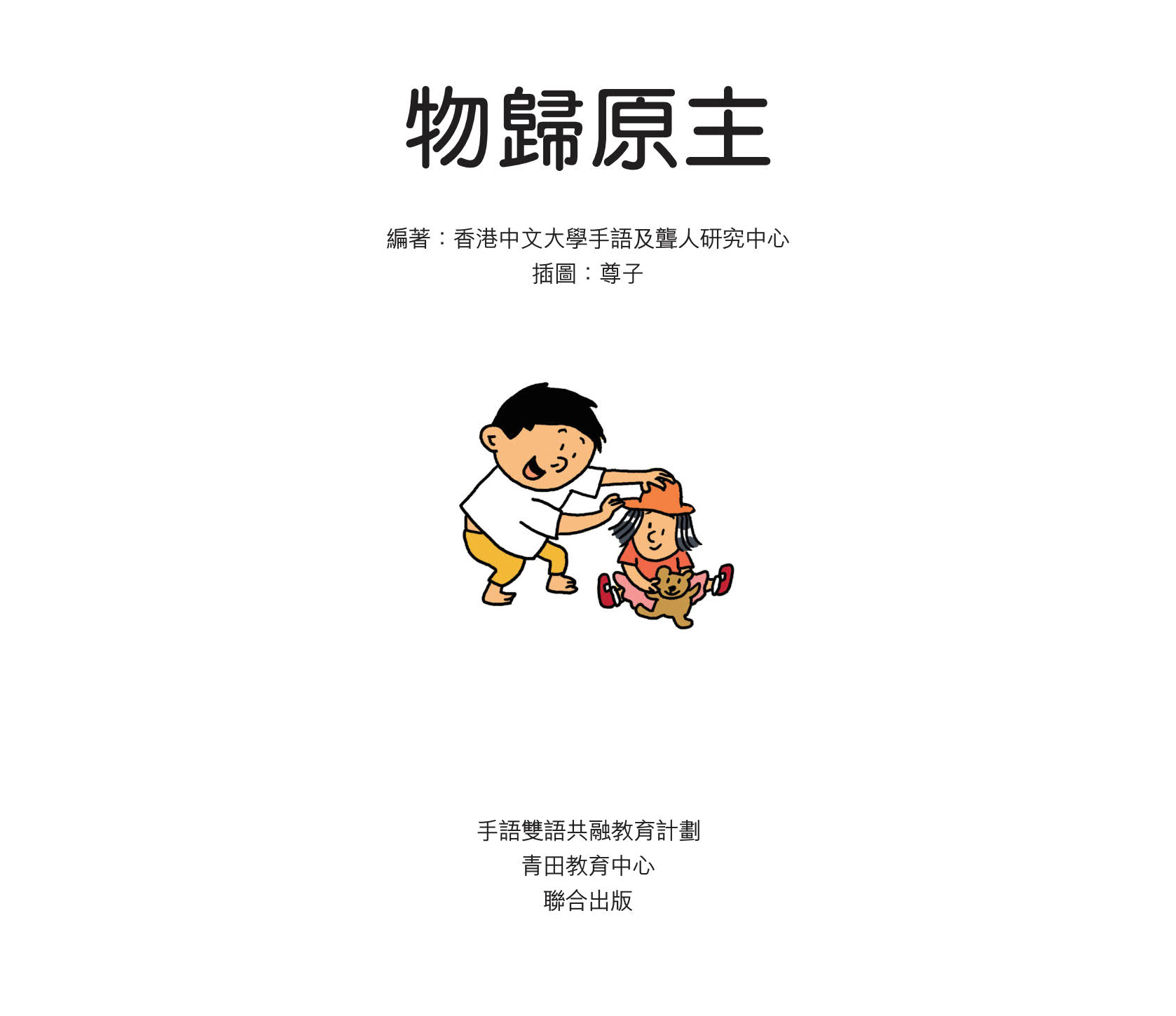
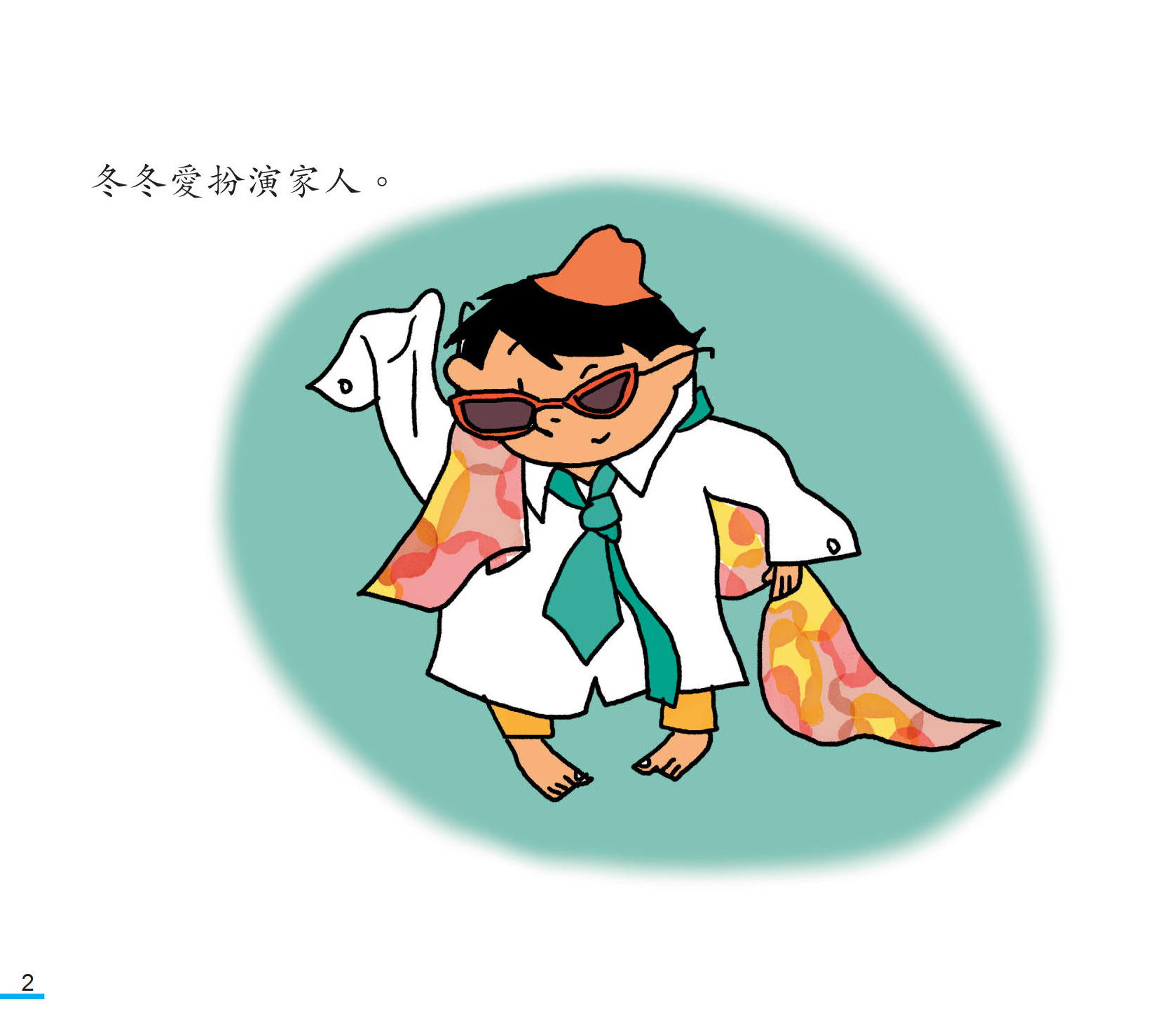
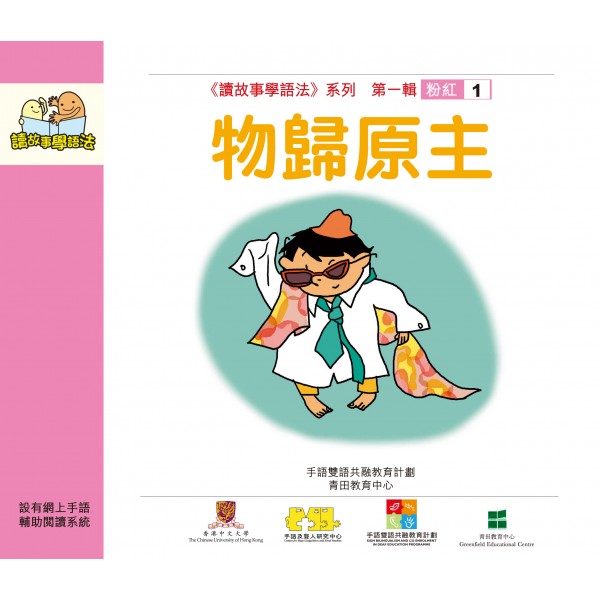
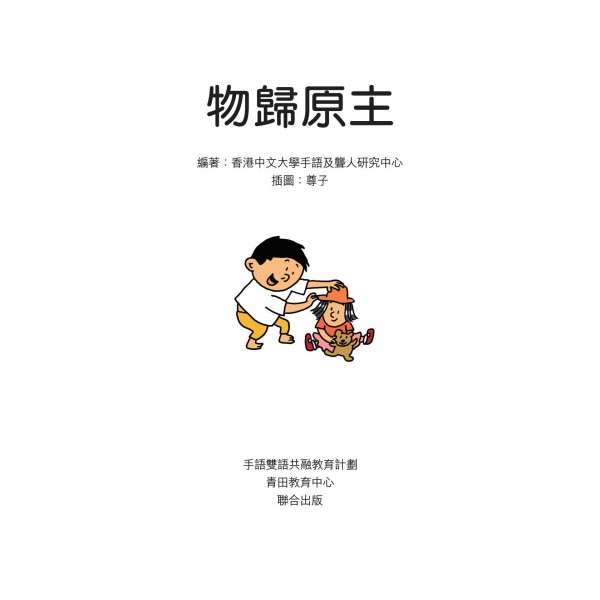
Pink 1-1: Returning the Item to its Owner (物歸原主)
In Chinese grammar, there are various ways to express possession. One common method is using the structural particle "的" (de).
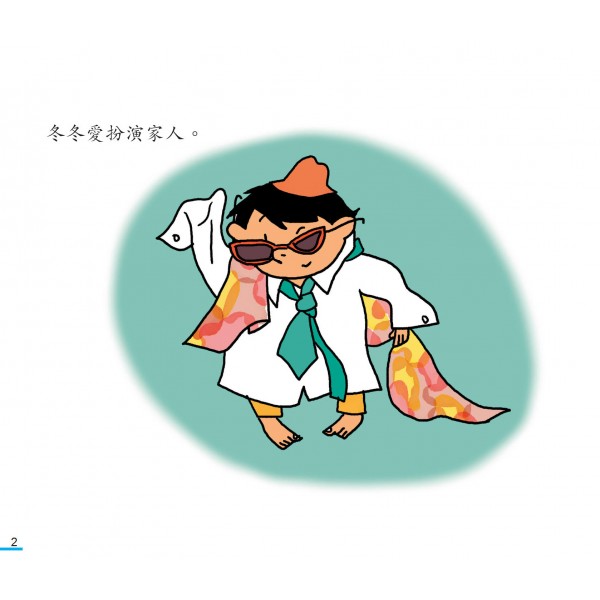
Examples: 「哥哥的襯衫」 (Big brother's shirt), 「媽媽的披肩」 (Mom's shawl), 「我的書包」 (My schoolbag), 「小偉的玩具」 (Xiaowei's toy).
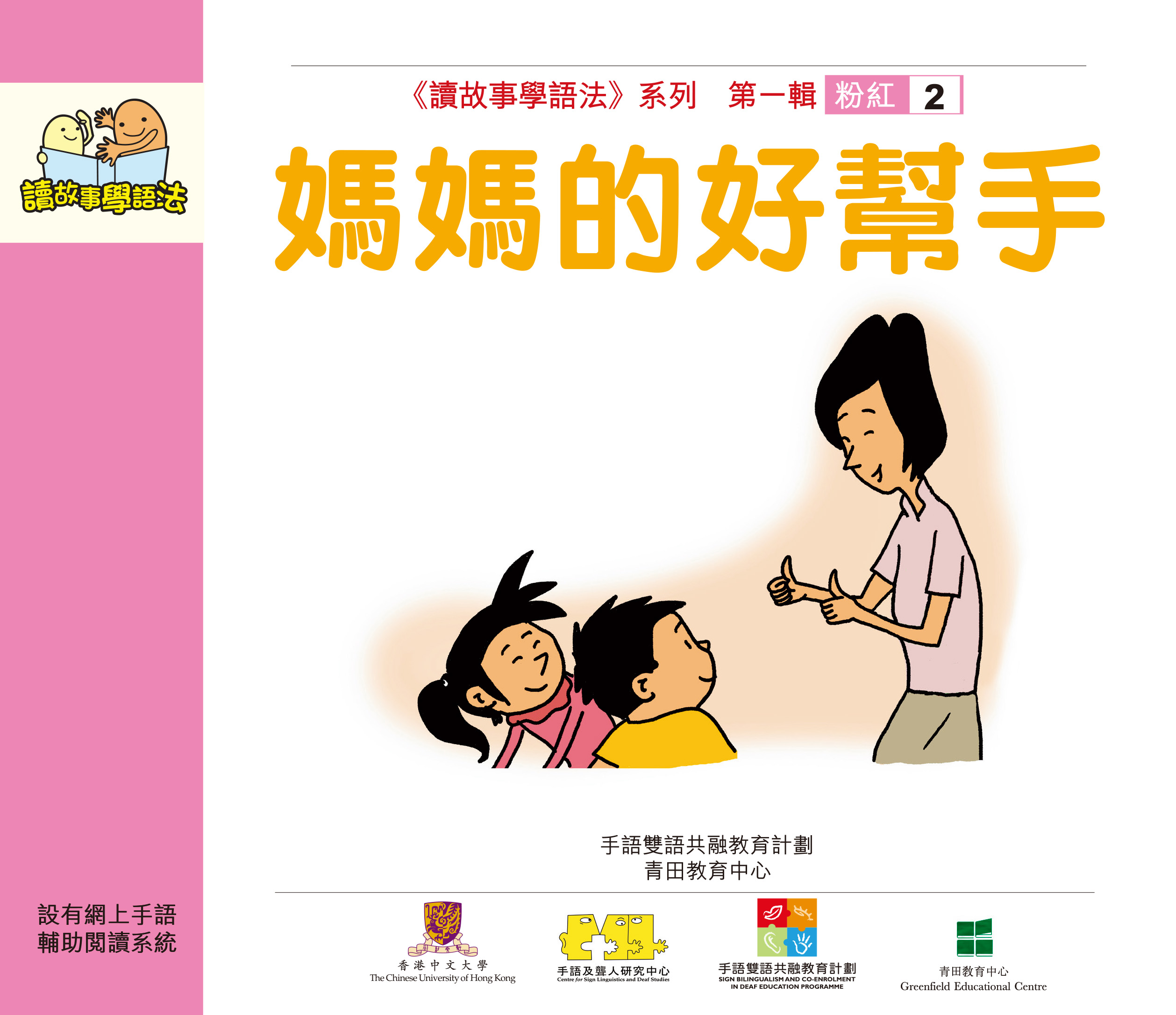
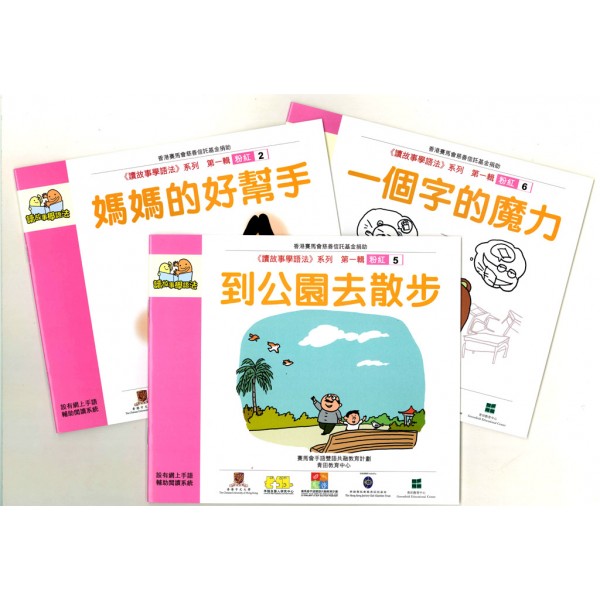
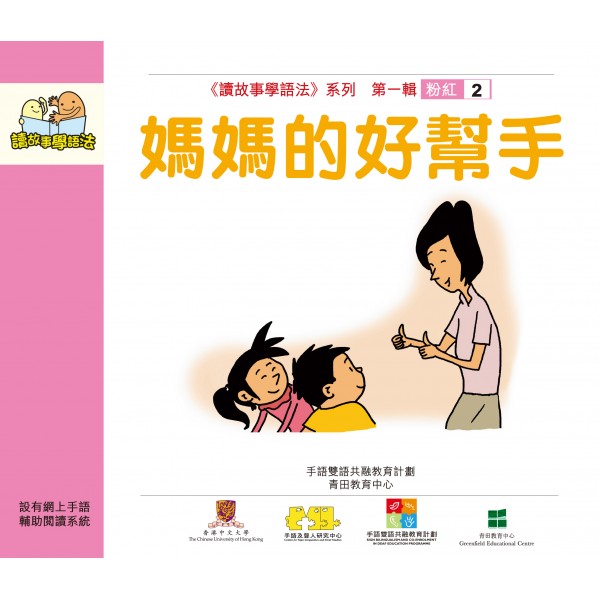
Pink 1-2: Mom's Best Helper (媽媽的好幫手)
To indicate that someone owns or has something, the possessive verb "有" (yǒu - to have/possess) is used in the sentence.
Examples: 「我有一架大飛機。」 (I have a big airplane.), 「小敏有很多糖果。」 (Xiaomin has a lot of candies.), 「姐姐有三本圖畫書。」 (Big sister has three picture books.).
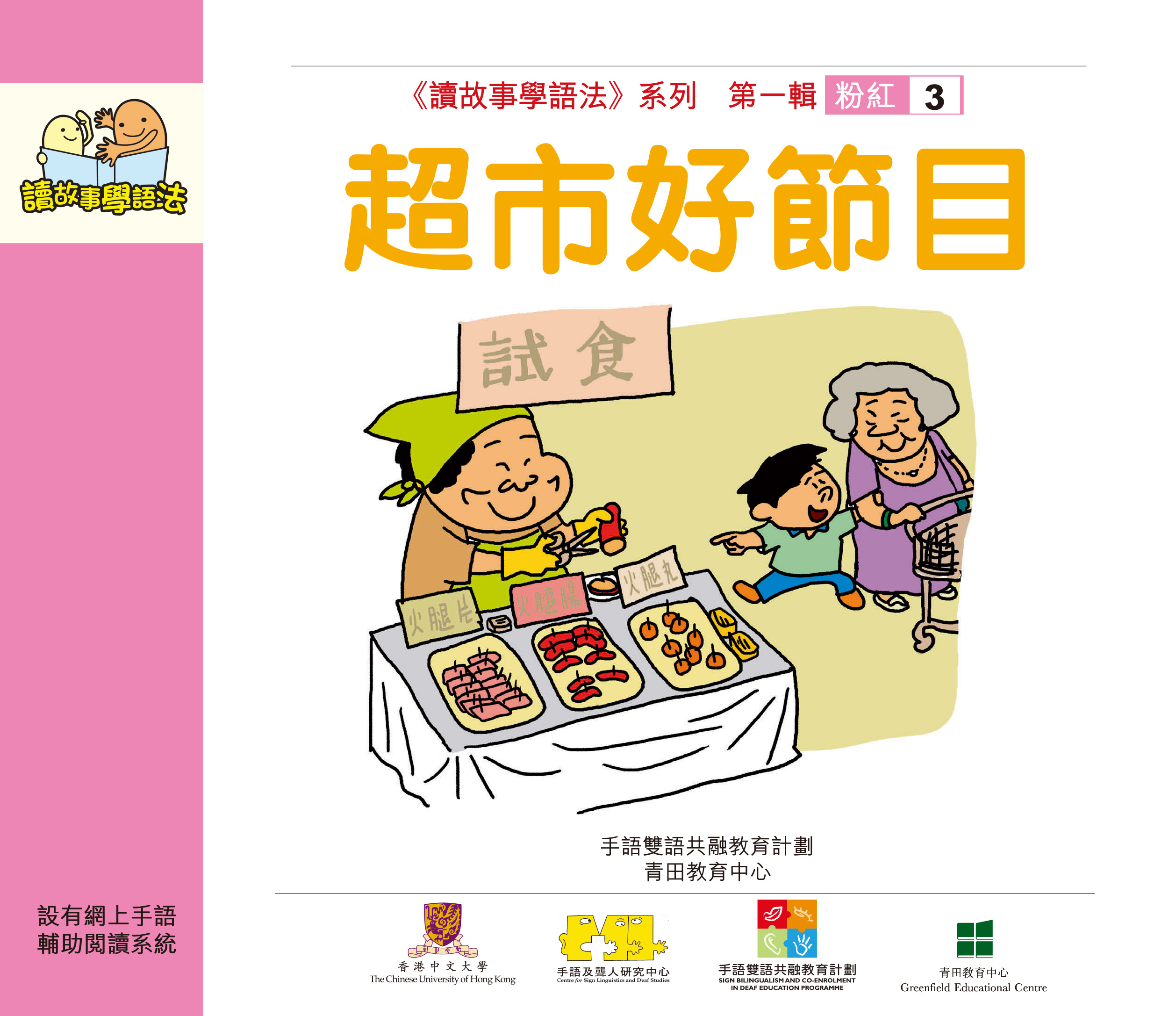
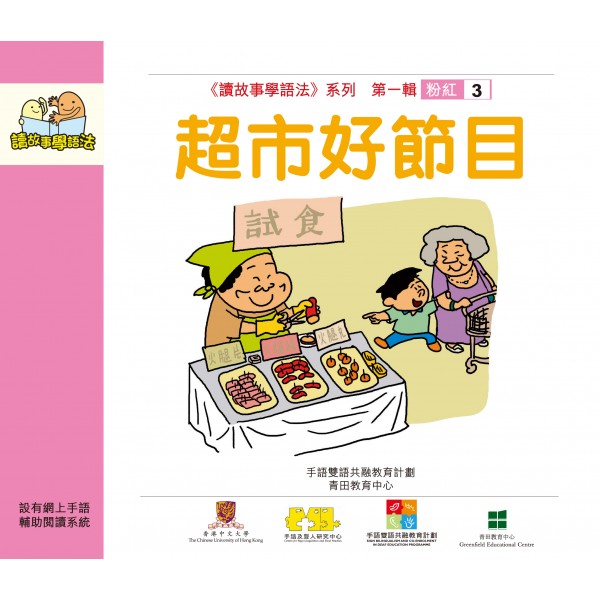
Pink 1-3: Great Program at the Supermarket (超市好節目)
"粒" (lì), "條" (tiáo), and "片" (piàn) are measure words (classifiers) placed before nouns to describe objects with specific shapes:
-
「粒」 is used for small, round, or grain-like objects. Example: 「一粒魚丸」 (one fishball).
-
「條」 is used for long, narrow, or strip-like objects. Example: 「兩條香腸」 (two sausages).
-
「片」 is used for thin, flat slices. Example: 「三片火腿」 (three slices of ham).
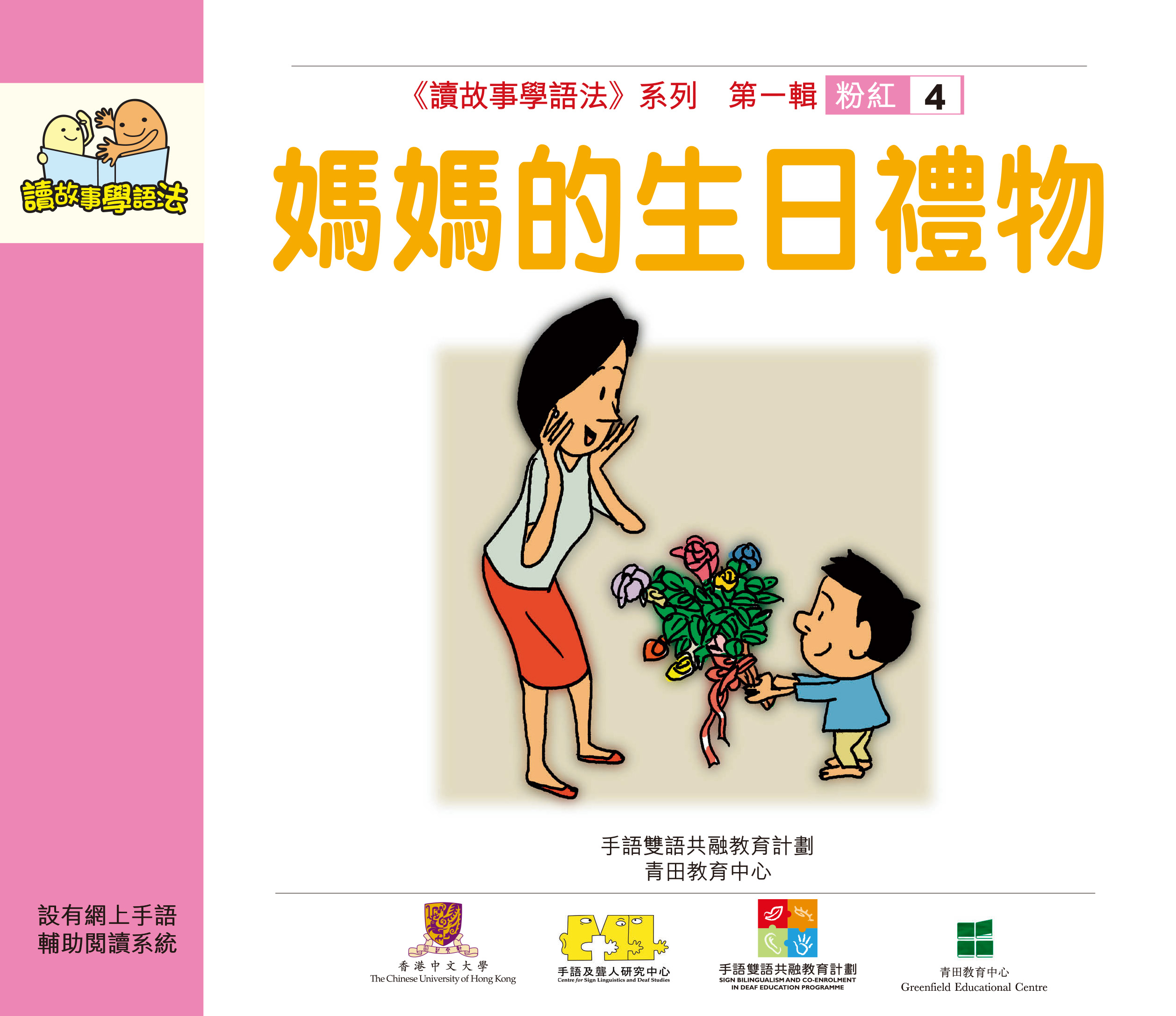
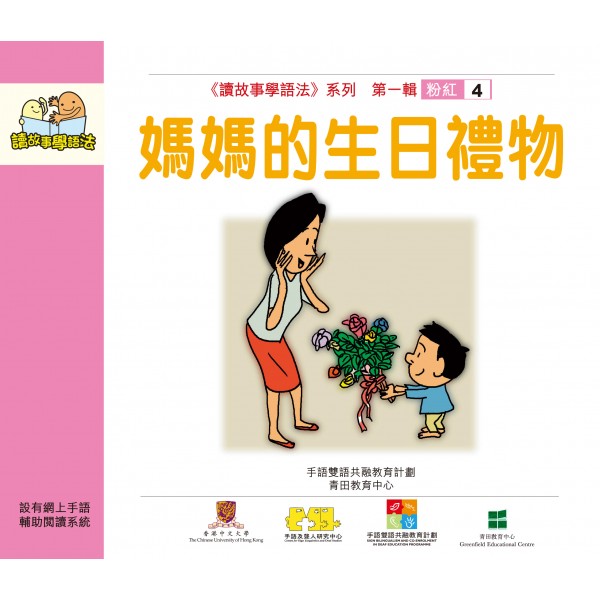
Pink 1-4: Mom's Birthday Gift (媽媽的生日禮物)
Both "枝" (zhī) and "束" (shù) are measure words:
-
「枝」 is used for long, thin, stem-like or rod-like objects, often relating to plants or branches. Examples: 「一枝箭」 (an arrow), 「兩枝花」 (two flowers).
-
「束」 is used for items tied or bundled together. Examples: 「一束花」 (a bunch of flowers), 「兩束稻草」 (two bundles of straw).
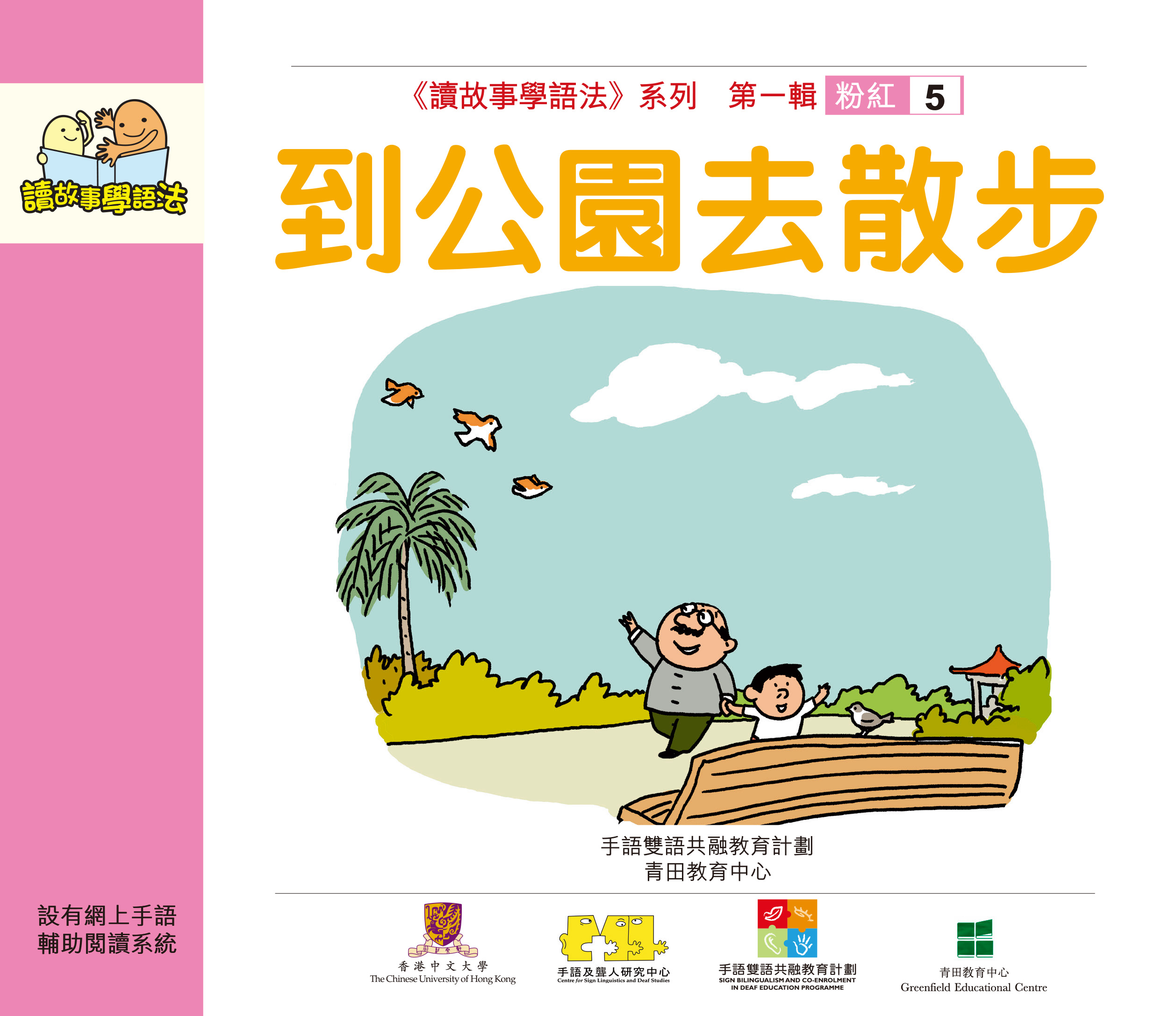
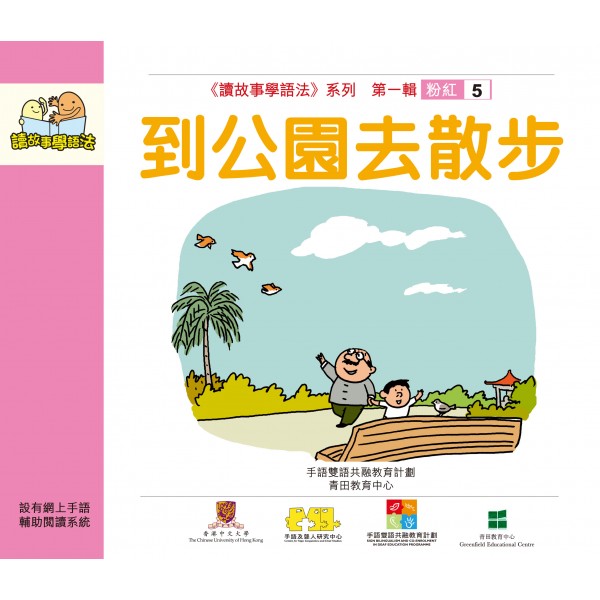
Pink 1-5: Taking a Walk in the Park (到公園去散步)
In addition to possession, "有" (yǒu) can also express existence (there is / there are). These sentences usually begin with a locative phrase (location), followed by "有" and the existing object.
Examples: 「兒童遊樂場有滑梯。」 (There is a slide in the children's playground.), 「圖書館裏有英文故事書。」 (There are English storybooks in the library.), 「樹上有兩隻小鳥。」 (There are two birds in the tree.).
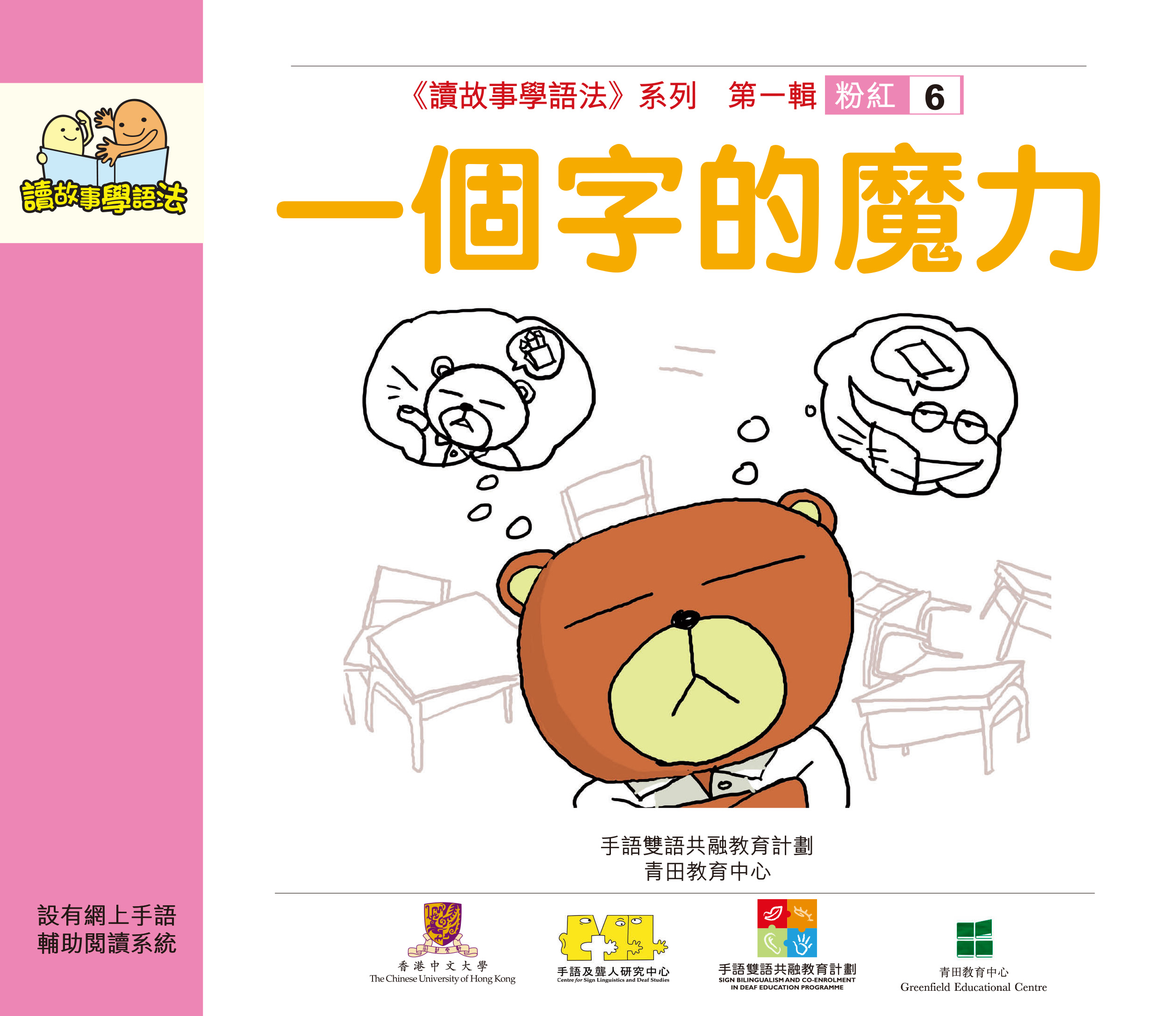
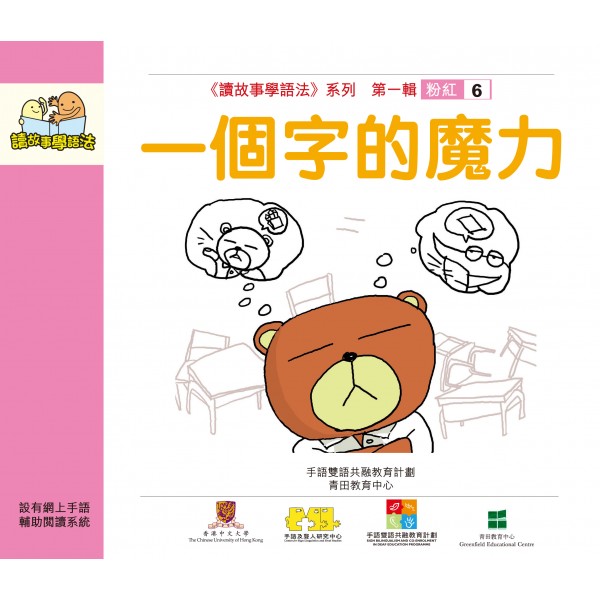
Pink 1-6: The Magic of One Word (一個字的魔力)
When we want to politely request someone to do something, we can use the polite word "請" (qǐng - please). "請" can be followed directly by a verb, or by a verb phrase/clause.
Examples (Direct Verb): 「請坐。」 (Please sit.), 「請進。」 (Please come in.). Examples (Phrase/Clause): 「請打開窗子。」 (Please open the window.), 「請你給我一本書。」 (Please give me a book.).
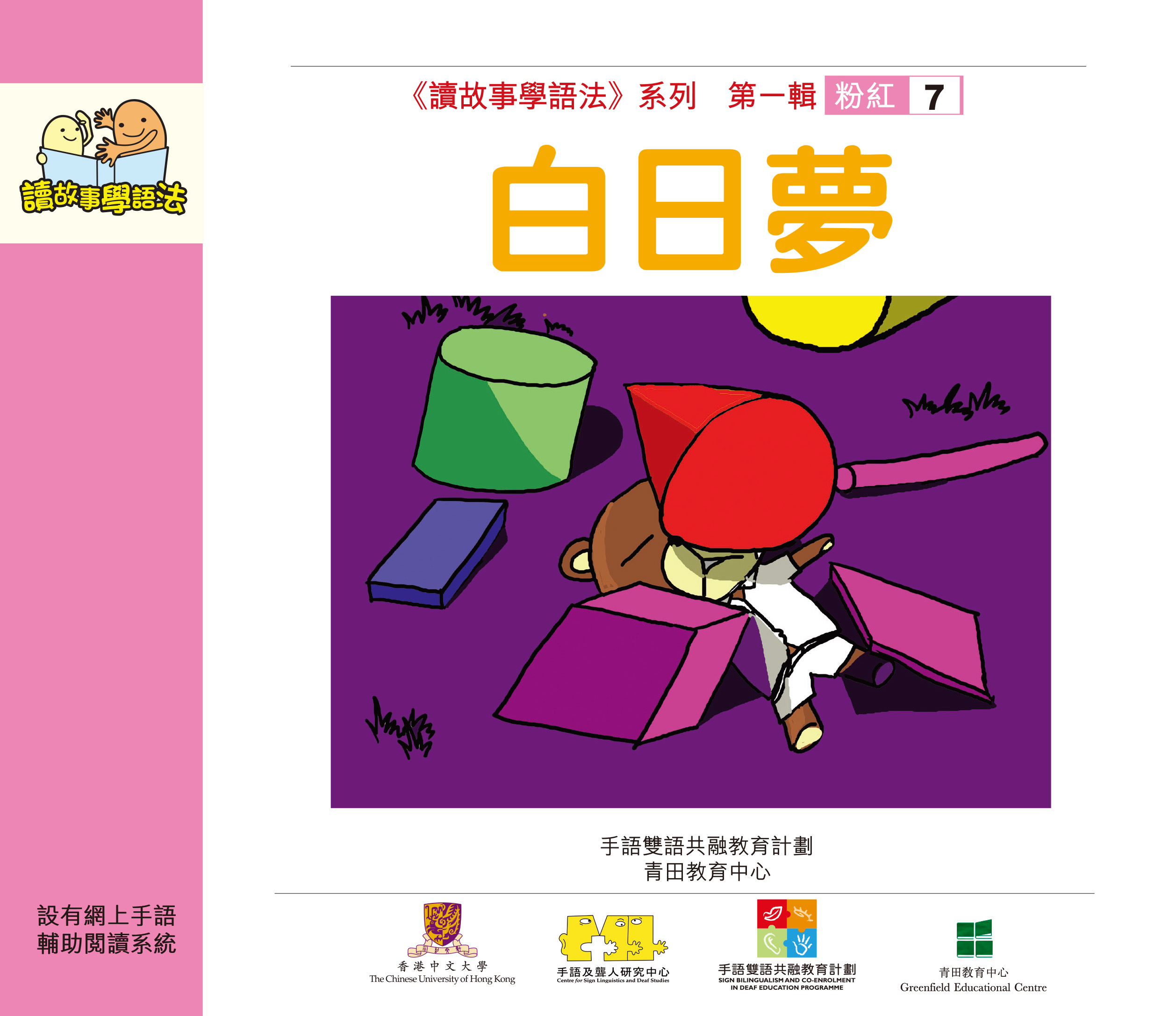
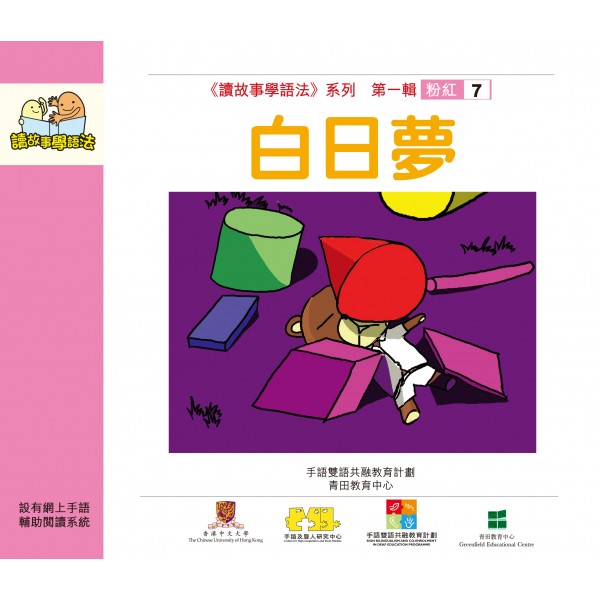
Pink 1-7: Daydreaming (白日夢)
When describing the characteristics or state of an object, the sentence pattern 「……是……的」 (... shì ... de) can be used to explain or illustrate its properties.
Examples: 「樹木是三角形的。」 (The trees are triangular.), 「這個電話是新的。」 (This phone is new.), 「我的書包是藍色的。」 (My schoolbag is blue.).
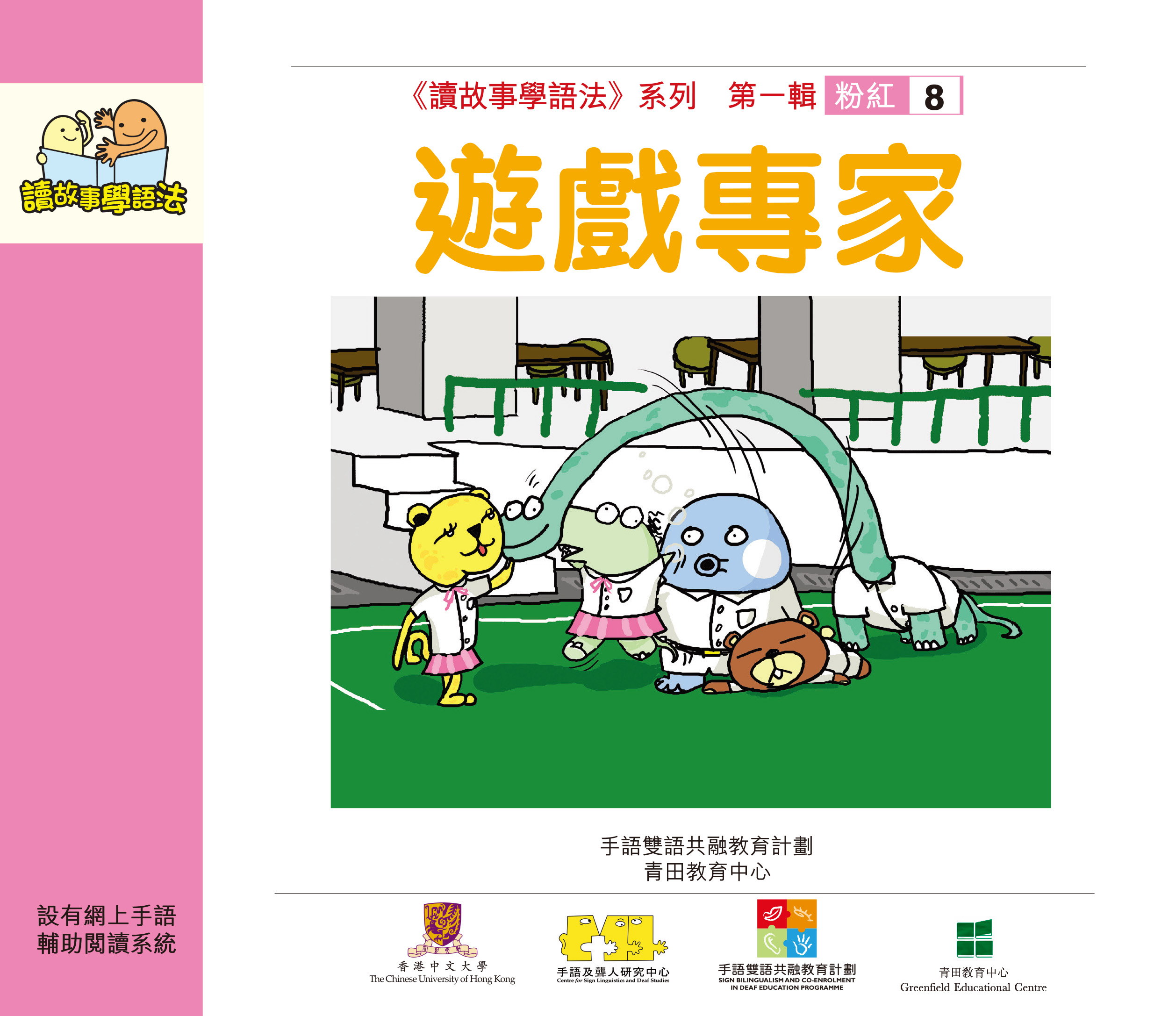
Pink 1-8: The Game Expert (遊戲專家)
The word "都" (dōu - all/both) is used to sum up everything, meaning that the statement applies to the entire group mentioned. It is usually placed before the verb and after the subject it summarizes.
Example 1: 「力力和阿朗都喜歡玩飛行棋。」 (Both Lili and Ar-Long like to play Aeroplane Chess.) This emphasizes that both individuals share the exact same interest. Example 2: 「所有學生都回家了。」 (All the students have gone home.) This emphasizes that every single student has left, and no one is left at school.
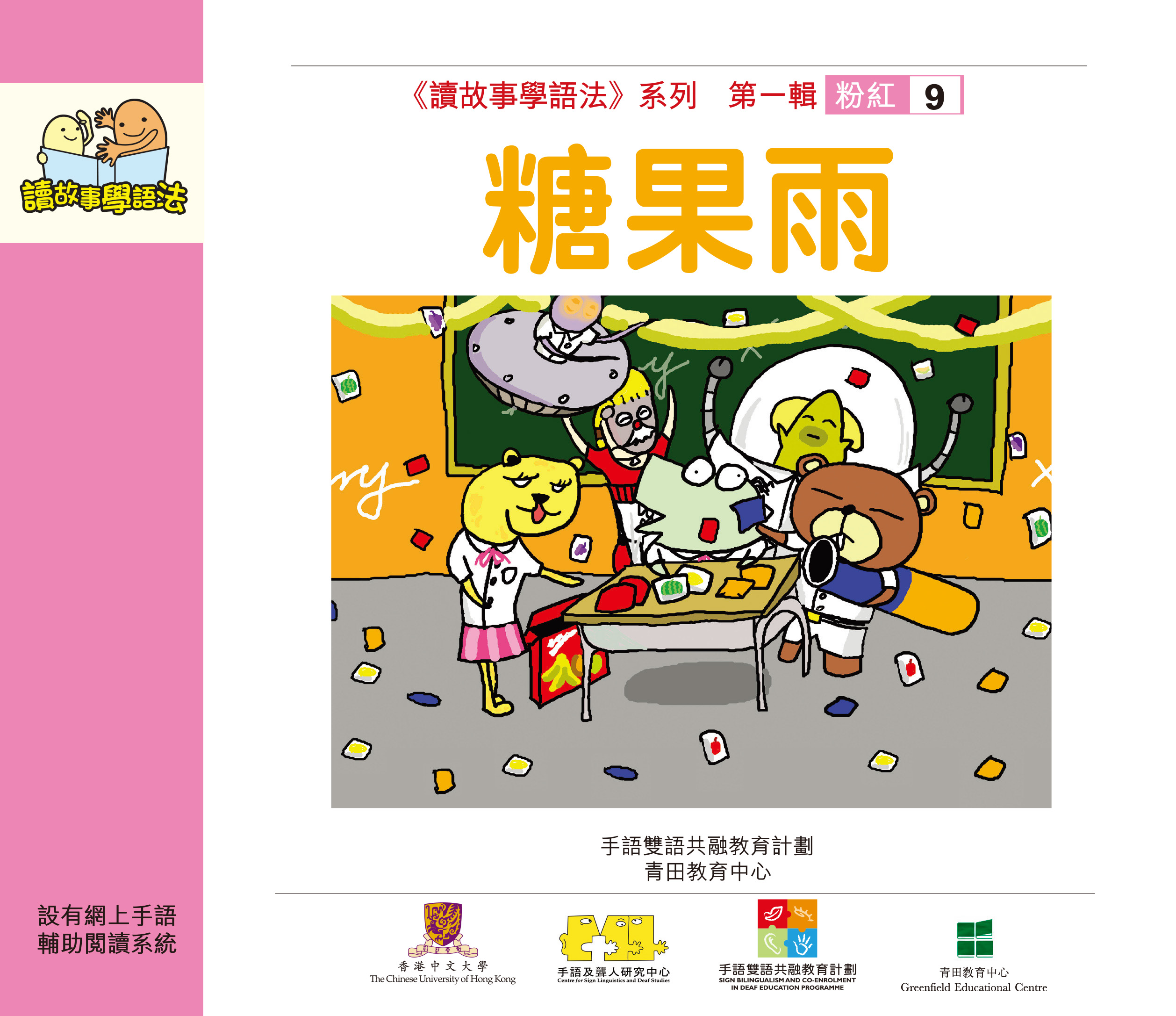
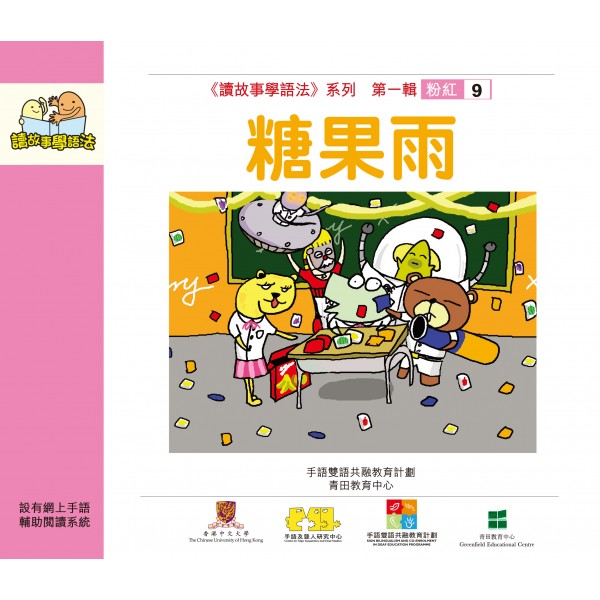
Pink 1-9: Candy Rain (糖果雨)
"包" (bāo), "筒" (tǒng), and "盒" (hé) are measure words for containers or packaging:
-
「包」 is used for items packaged in bags or packets. Example: 「一包紅豆」 (a bag of red beans).
-
「筒」 is used for tube-shaped or cylindrical containers. Example: 「一筒薯片」 (a tube of potato chips).
-
「盒」 is used for boxes or containers that come with a base and a matching lid. Example: 「一盒顏色筆」 (a box of colored pencils).
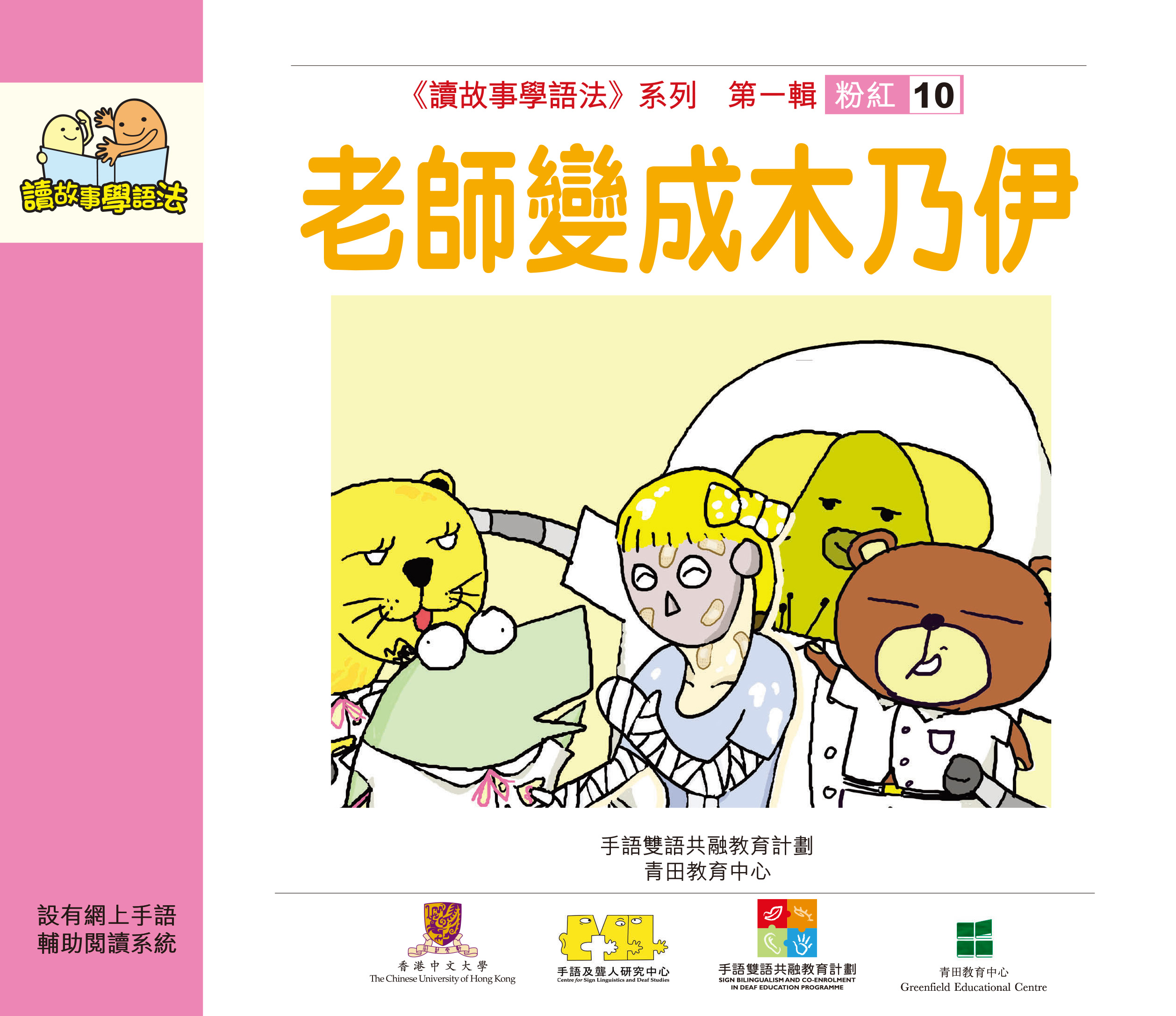
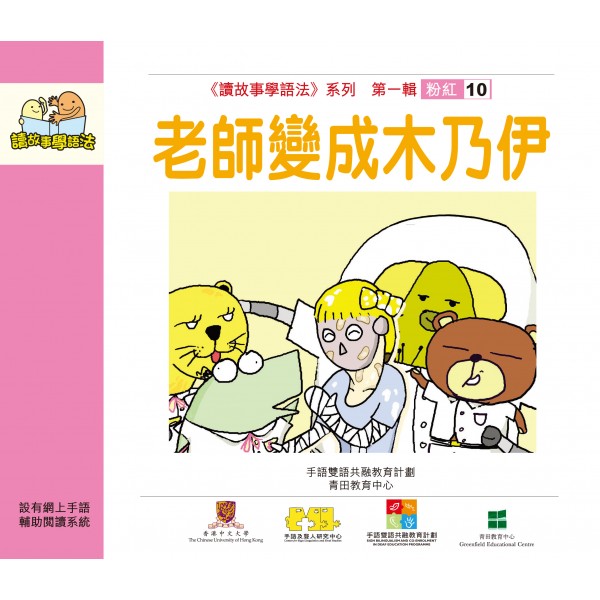
Pink 1-10: Teacher Turns into a Mummy (老師變成木乃伊)
In the sentence 「我幫你貼上膠布。」 (I help you put on a band-aid), the person performing both actions—「幫」 (helping) and 「貼上膠布」 (putting on the band-aid)—is 「我」 (I). This means every action in the sentence is initiated by the subject.
Example 1: 「小明幫媽媽做家務。」 (Xiaoming helps Mom do housework.) This means Xiaoming is helping Mom, and Xiaoming is the one doing the housework. Example 2: 「姐姐幫我拿書包。」 (Big sister helps me carry my schoolbag.) This means Big sister is helping me, and Big sister is the one carrying the schoolbag.